
tldr
We treat “trust is impossible to rebuild” like settled science. It’s not. It’s a choice that becomes self-fulfilling. Between an event and our response there’s a gap, and judgment lives in that gap. If nobody gave the person feedback along the way, the silence is the problem, not the trust.
We judge everything. Situations, decisions, processes, people. It’s constant, and it’s ours to fight. Most of us barely try.
Take this one:
Once trust is lost, it’s almost impossible to get back.
A close colleague said this to me recently. I’ve been hearing it in professional settings constantly, and nobody ever pushes back. As if it’s settled science.
It’s one of the most damaging things we repeat to each other.
Think about what we’re actually saying. We’re saying that a person who loses our trust is, for all practical purposes, permanently diminished in our eyes. That no amount of changed behavior or growth can undo the label we’ve placed on them. We’ve turned a single event, or a pattern of events, into a life sentence.
That is not wisdom. That’s ego dressed up as principle.
The axiom we never question

Trust takes years to build, seconds to break, and forever to repair. People say it with such conviction, like they’re quoting gravity. But it’s not a law. It’s a choice. A choice we’ve repeated so many times it feels inevitable.
And once you accept it as a rule, you stop trying. You stop giving people room to correct course, stop looking for evidence that contradicts the judgment you’ve already made. The axiom becomes self-fulfilling: trust can’t be rebuilt because we’ve decided it can’t.
What judgment actually does

When someone loses our trust, we don’t just become cautious. We reorganize our entire perception of them. Everything they do gets filtered through the verdict we’ve already reached. A good action becomes suspicious. A neutral one becomes confirmation of something darker. No benefit of the doubt, no room for correction.
We essentially decide: this person did this thing, therefore this person is this thing, and this person will never be anything else.
It’s absurd. And yet it’s exactly how most of us operate.
The irony is, I don’t disagree with my colleague. We are wired this way. I can’t prove it genetically, but the pattern is everywhere. Once judgment locks in, we don’t fight it. We feed it. We look for reasons we’re right. We build a case for why the loss of trust was justified, why our reaction is proportional. We convince ourselves that giving another chance would be naive.
We never ask whether the judgment itself might be the problem.
The workplace version

This gets sharper in professional settings, because at work there’s usually a system around the person. Managers, processes, feedback loops.
Say someone makes the same mistake ten times. You’ve watched it happen. Your trust in them is gone. Fair enough, on the surface. But the harder question is worth asking: did anyone actually tell them? Did they get clear feedback after the first time, the second, the fifth? Or did everyone just quietly accumulate judgment while the person kept operating in the dark?
When someone loses trust through repeated mistakes, and nobody along the way gave them a chance to correct course, the silence is the problem. The system had the information. The feedback never happened. And now we call it a trust issue when it might be something else entirely.
What the Stoics understood
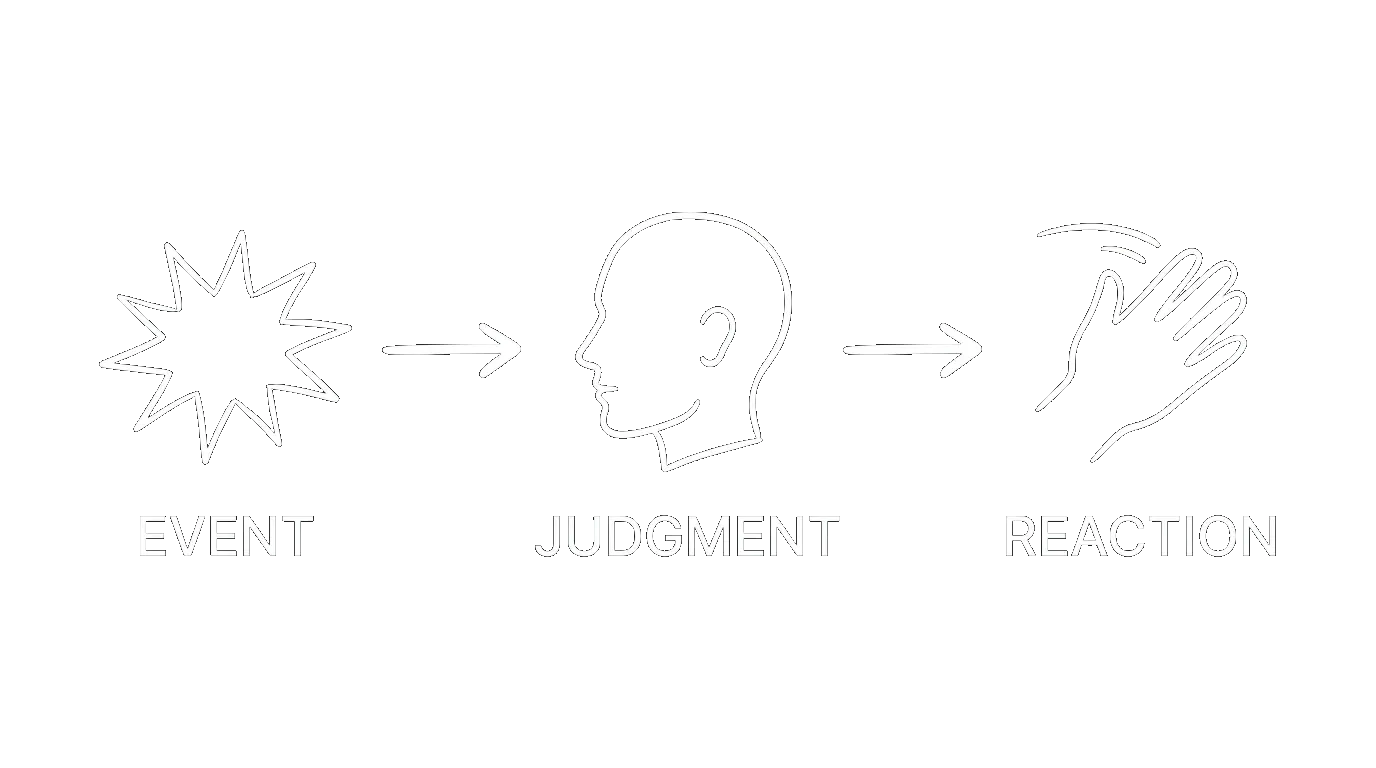
Stoicism is my favorite corner of philosophy, and it’s no accident that judgment sits at the center of almost everything the Stoics wrote about. Marcus Aurelius, Epictetus, Seneca: they all understood that between an event and our response, there’s a gap. Judgment lives in that gap.
Something happens. We judge it. Then we act on the judgment, not on the event itself.
The Stoics would say: the event is neutral. Your judgment is what gives it weight. And that judgment is shaped by everything you’ve lived through, feared, and protected. It feels like truth. It’s interpretation.
This is also why no serious Stoic would ever call themselves one. They knew that mastering judgment isn’t a destination. It’s a lifelong fight you never fully win.
The harder path

Start with yourself. Challenge your own judgment. Detach enough to ask whether the story you’ve built about someone is the full picture or just the comfortable one. Locking in on a belief because it’s simpler doesn’t solve anything.
But the internal work alone isn’t enough. Ask yourself: why did this person lose my trust? What did I do to prevent it? What am I willing to do to restore it? Am I prepared to prove my own judgment wrong?
We are all human beings with our own judgments, and if we want to work together, especially in a professional setting, we have to give each other more than a verdict. The benefit of the doubt. The feedback. The processes and tools to make trust easier to build than it is to lose.
That’s the only version of this that actually works.